

AI Agents and the Coming Transformation of ESG Compliance in Indian Industry
India's BRSR reporting landscape is shifting from annual manually assembled filings to real-time AI-driven compliance intelligence. This article examines what agentic ESG systems look like in practice, why chemical and process industries under BRSR Principle 6 stand to benefit most, and why building this infrastructure today is a strategic advantage not a future obligation.
By Ojas HarkareJune 08, 2026
At a Glance
- When Machines Read the Smoke: How an Agentic AI Dashboard can automate ESG Compliance
- What an AI agent actually is
- The compliance gap that agentic systems are built to close
- Five ways AI agents are reshaping sustainability reporting right now
- The broader picture: AI agents and the future of sustainability reporting
- What is holding adoption back
- The direction of travel
When Machines Read the Smoke: How an Agentic AI Dashboard can automate ESG Compliance

Every year, thousands of chemical facilities across India submit their BRSR reports to the stock exchange. The data inside those reports was gathered over several months by teams working across plant operations, procurement, human resources, and legal, reconciling figures manually, writing narrative disclosures, and filing the final document long after the events it describes have passed. An incident that occurred in April may not appear in an ESG disclosure until October of the same year, by which time the window for meaningful regulatory response has often already closed.
This is the structural problem at the heart of corporate sustainability reporting in India today. The BRSR framework introduced by SEBI in 2021 is rigorous and well designed. The gap lies not in the regulation but in the infrastructure used to comply with it. That infrastructure is about to change fundamentally, driven by a class of software systems known as AI agents.
What an AI agent actually is
An AI agent is an autonomous software system that perceives its environment through data inputs, makes decisions based on defined goals, takes actions in connected systems, and refines its behaviour based on outcomes. Unlike a static analytics tool that produces a report when instructed, an agent operates continuously, monitors its data environment in real time, and initiates actions without waiting for a human prompt.
In the context of sustainability reporting, this distinction is significant. A conventional ESG data platform tells you what happened last quarter. An agentic system tells you what is happening right now, flags the compliance implication before it becomes a filing problem, and drafts the relevant disclosure section while the event is still fresh. The difference in regulatory risk and reporting credibility between those two approaches is substantial.
The compliance gap that agentic systems are built to close
BRSR Principle 6 is the most technically demanding section of India's sustainability reporting framework for chemical and process industries. It requires precise quantitative disclosure of energy consumed, water withdrawn, greenhouse gases emitted across Scope 1, 2, and 3, criteria air pollutants released, hazardous substances involved in incidents, and the population and ecological impact of those incidents.
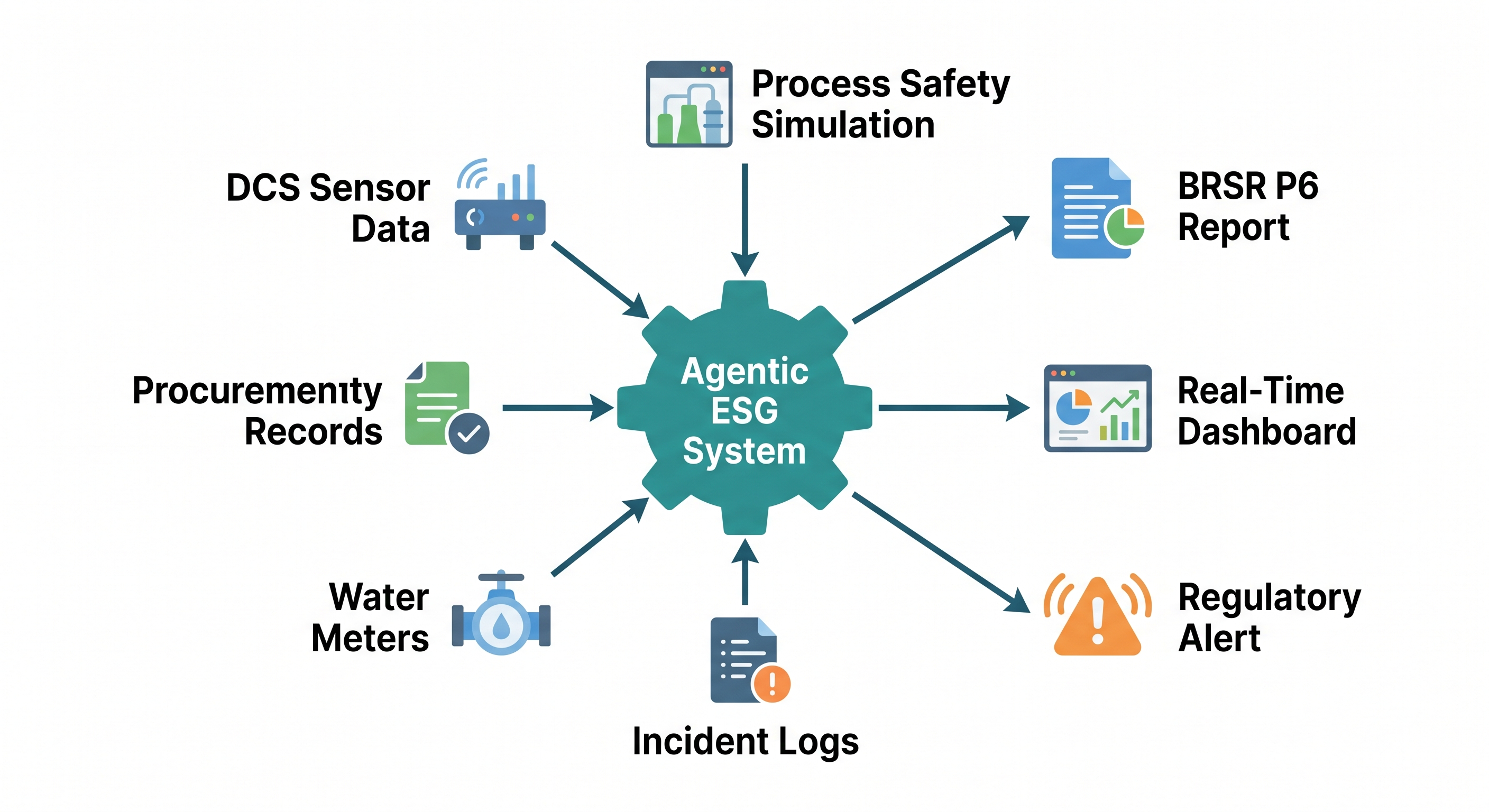
Each of these data points originates in a different system. DCS historian, water meter, combustion log, incident management platform, procurement database. In most facilities today none of these systems are connected to each other for ESG purposes. The data is extracted manually at year end, entered into spreadsheets, and interpreted by consultants who were not present when the events occurred. The result is a disclosure that is accurate in format but frequently imprecise in substance, and entirely retrospective in timing.
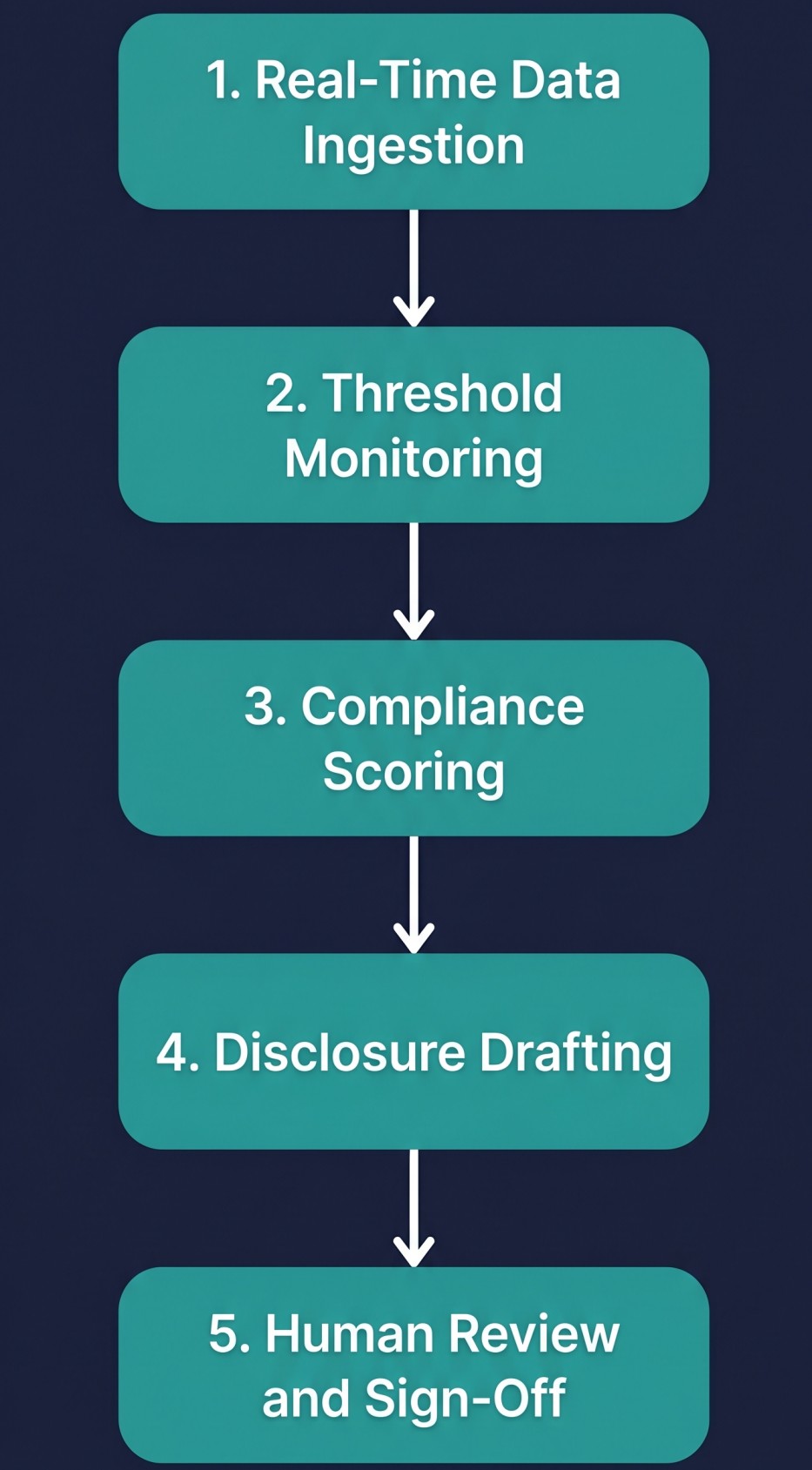
AI agents address this by sitting at the intersection of these systems continuously. They ingest real-time process data, apply the relevant BRSR indicator thresholds, flag non-compliant events as they occur, and generate structured disclosure-ready outputs that a compliance officer reviews and signs off rather than builds from scratch.
Five ways AI agents are reshaping sustainability reporting right now
Continuous Scope 1 emissions monitoring: Agents connected to plant combustion and process sensor networks calculate Scope 1 greenhouse gas emissions in real time, flagging deviations from BRSR P6 thresholds before they compound into annual compliance gaps. No year-end data collection exercise required.
Real-time Scope 3 tracking from procurement data: Agents that query procurement and logistics systems as purchase orders are raised, calculating upstream Scope 3 Category 1 and Category 4 emissions automatically rather than retrospectively from annual spend summaries. This is critical given that Scope 3 represents 70 to 90 percent of the total carbon footprint for most chemical companies.
Regulatory change monitoring and alert: Agents that continuously read SEBI circulars, MCA notifications, and state pollution control board updates, mapping regulatory changes to a company's specific BRSR disclosure obligations and alerting the compliance team before filing deadlines. India's ESG regulatory environment is evolving rapidly and manual tracking is no longer sufficient.
Incident-to-disclosure automation: Agents that take a process safety event, assess its environmental consequences using available data, score the result against BRSR P6 indicators, and draft the relevant disclosure section automatically. The compliance officer reviews and approves rather than researches and writes.
Ambient air quality linked ESG reporting: Agents powered by LSTM neural networks that monitor regional AQI continuously, correlate air quality deterioration with nearby industrial activity, and produce draft BRSR P6 criteria air pollutant disclosures supported by real sensor evidence rather than self-reported estimates.
The broader picture: AI agents and the future of sustainability reporting
The current BRSR reporting cycle is annual. A team of consultants collects data from plant operations, procurement, HR, and legal, reconciles it manually, writes narrative disclosures, and submits the final report twelve months after the events it describes. An incident that happened in April does not appear in an ESG disclosure until the following October at the earliest. By that time the regulatory window for corrective action has often already closed.

It points toward a much larger structural shift that is beginning to reshape corporate sustainability reporting globally: the transition from human-assembled ESG reports to continuously updated, AI-driven ESG intelligence systems. AI agents change this timeline fundamentally. An agent is an autonomous software system that perceives its environment, takes actions based on defined goals, and learns from outcomes.
What is holding adoption back
The obstacles are not primarily technical. The engineering capability to build agentic ESG systems exists today using open-source Python libraries, freely available government APIs, and well-documented regulatory frameworks. The obstacles are organisational.
Process safety teams, environmental monitoring teams, and sustainability reporting teams in most Indian chemical companies do not share data systems or workflows. The sensor infrastructure that would make continuous monitoring possible is installed in large facilities but the data it produces is not connected to ESG outputs.
There is also a skills gap. The professionals who understand process engineering deeply enough to design these integrations are rarely the same people who understand BRSR reporting well enough to know what the output needs to look like. Closing that gap requires engineers trained at the intersection of chemical engineering and ESG policy.

The direction of travel
SEBI's BRSR Core regulation is already pointing in the direction that agentic systems are built for. The transition of Scope 3 emissions, biodiversity assessment, and Life Cycle Analysis from voluntary Leadership Indicators to mandatorily assured Essential Indicators for all top 1,000 listed companies by financial year 2026 to 2027 means the volume and precision of required ESG data is about to increase dramatically. Manual processes will not scale to meet that requirement without either a substantial rise in compliance cost or a substantial fall in disclosure quality.
The companies that begin building agentic ESG infrastructure now, connecting plant sensor networks to compliance workflows and training engineers who can work across both domains, will be structurally better prepared for that transition than those waiting for the mandate to force the change.